---
title: How to Choose HVAC Product Materials Based on UL Flammability Rating
description: Understanding flame resistance levels for HVAC applications can be difficult. Let Mueller help out you with this guide!
image: https://blog.cohesivecomponents.com/hubfs/firefighting.jpg
---
[](https://www.sur-seal.com/)
[704.837.8139](tel:+7048378139)
[GET A CUSTOM QUOTE](https://www.sur-seal.com/request-a-quote/)
- [Markets](https://www.sur-seal.com/markets/)
- [Aerospace Solutions](https://www.sur-seal.com/markets/aerospace/)
- [Alternative Energy Solutions](https://www.sur-seal.com/markets/ev-alternative-energy/)
- [Climate Control Solutions](https://www.sur-seal.com/markets/climate-control/)
- [Electrical Sealing Solutions](https://www.sur-seal.com/markets/lighting/)
- [Healthcare Solutions](https://www.sur-seal.com/markets/medical-healthcare/)
- [Industrial Solutions](https://www.sur-seal.com/markets/industrial/)
- [Solar Solutions](https://www.sur-seal.com/markets/solar/)
- [Capabilities](https://www.sur-seal.com/services/)
- [CNC Cutting](https://www.sur-seal.com/services/cnc-cutting/)
- [Custom Assembly](https://www.sur-seal.com/services/custom-assembly/)
- [Die Cutting](https://www.sur-seal.com/services/die-cutting/)
- [Rapid Prototyping](https://www.sur-seal.com/services/die-cut-prototyping/)
- [Engineering](https://www.sur-seal.com/services/engineering/)
- [Laminating](https://www.sur-seal.com/services/laminating/)
- [Laser and Optical Inspection](https://www.sur-seal.com/services/laser-inspection/)
- [Precision Slitting](https://www.sur-seal.com/services/precision-slitting/)
- [Design Collaboration](https://www.sur-seal.com/services/product-collaboration/)
- [Product Manufacturing](https://www.sur-seal.com/services/product-manufacturing/)
- [Sealing & Containment](https://www.sur-seal.com/services/sealing-containment/)
- [Tubing](https://www.sur-seal.com/services/tubing/)
- [Extrusion](https://www.sur-seal.com/services/extrusion/)
- [Water Jet Cutting](https://www.sur-seal.com/services/water-jet-cutting/)
- [Precision Skiving](https://www.sur-seal.com/services/precision-skiving/)
- [Sheeting](https://www.sur-seal.com/services/sheeting/)
- [Molding](https://www.sur-seal.com/services/molding/)
- [Materials](https://www.sur-seal.com/products/)
- [Acoustic Insulation](https://www.sur-seal.com/products/acoustic-insulation/)
- [Custom Gaskets](https://www.sur-seal.com/products/gaskets/)
- [Environmental Seals](https://www.sur-seal.com/products/environment-seals/)
- [Filtration](https://www.sur-seal.com/products/filtration/)
- [Foams](https://www.sur-seal.com/products/foam/)
- [Plastics](https://www.sur-seal.com/products/plastic/)
- [Silicones](https://www.sur-seal.com/products/silicone/)
- [Rubber](https://www.sur-seal.com/products/rubber/)
- [Tapes & Adhesives](https://www.sur-seal.com/products/tapes-adhesives/)
- [Thermal Management](https://www.sur-seal.com/products/thermal-management/)
- [Nonwovens](https://www.sur-seal.com/products/nonwovens/)
- [Paper, Films & Foils](https://www.sur-seal.com/products/papers-films-foils/)
- [Reclosable Fasteners](https://www.sur-seal.com/products/reclosable-fasteners/)
- [About](https://www.sur-seal.com/about/)
- [Careers](https://www.sur-seal.com/careers/)
- [Case Studies](https://www.sur-seal.com/case-studies/)
- [Locations](https://www.sur-seal.com/locations/)
- [News](https://www.sur-seal.com/blog/news/)
- [Service Area](https://www.sur-seal.com/service-area/)
- [Testimonials](https://www.sur-seal.com/reviews/)
- [Quality](https://www.sur-seal.com/about/quality/)
- [Blog](https://www.sur-seal.com/blog/)
[Contact Us](https://www.sur-seal.com/contact/)
[](https://www.sur-seal.com/)
[tel:+18887310765](tel:+18887310765)
[](https://www.sur-seal.com/)
- [Markets](https://www.sur-seal.com/markets/)
- [Markets](https://www.sur-seal.com/markets/)
- [Aerospace Solutions](https://www.sur-seal.com/markets/aerospace/)
- [Alternative Energy Solutions](https://www.sur-seal.com/markets/ev-alternative-energy/)
- [Climate Control Solutions](https://www.sur-seal.com/markets/climate-control/)
- [Electrical Sealing Solutions](https://www.sur-seal.com/markets/lighting/)
- [Healthcare Solutions](https://www.sur-seal.com/markets/medical-healthcare/)
- [Industrial Solutions](https://www.sur-seal.com/markets/industrial/)
- [Solar Solutions](https://www.sur-seal.com/markets/solar/)
- [Capabilities](https://www.sur-seal.com/services/)
- [Capabilities](https://www.sur-seal.com/services/)
- [CNC Cutting](https://www.sur-seal.com/services/cnc-cutting/)
- [Custom Assembly](https://www.sur-seal.com/services/custom-assembly/)
- [Die Cutting](https://www.sur-seal.com/services/die-cutting/)
- [Rapid Prototyping](https://www.sur-seal.com/services/die-cut-prototyping/)
- [Engineering](https://www.sur-seal.com/services/engineering/)
- [Laminating](https://www.sur-seal.com/services/laminating/)
- [Laser and Optical Inspection](https://www.sur-seal.com/services/laser-inspection/)
- [Precision Slitting](https://www.sur-seal.com/services/precision-slitting/)
- [Design Collaboration](https://www.sur-seal.com/services/product-collaboration/)
- [Product Manufacturing](https://www.sur-seal.com/services/product-manufacturing/)
- [Sealing & Containment](https://www.sur-seal.com/services/sealing-containment/)
- [Tubing](https://www.sur-seal.com/services/tubing/)
- [Extrusion](https://www.sur-seal.com/services/extrusion/)
- [Water Jet Cutting](https://www.sur-seal.com/services/water-jet-cutting/)
- [Precision Skiving](https://www.sur-seal.com/services/precision-skiving/)
- [Sheeting](https://www.sur-seal.com/services/sheeting/)
- [Molding](https://www.sur-seal.com/services/molding/)
- [Materials](https://www.sur-seal.com/products/)
- [Materials](https://www.sur-seal.com/products/)
- [Acoustic Insulation](https://www.sur-seal.com/products/acoustic-insulation/)
- [Custom Gaskets](https://www.sur-seal.com/products/gaskets/)
- [Environmental Seals](https://www.sur-seal.com/products/environment-seals/)
- [Filtration](https://www.sur-seal.com/products/filtration/)
- [Foams](https://www.sur-seal.com/products/foam/)
- [Plastics](https://www.sur-seal.com/products/plastic/)
- [Silicones](https://www.sur-seal.com/products/silicone/)
- [Rubber](https://www.sur-seal.com/products/rubber/)
- [Tapes & Adhesives](https://www.sur-seal.com/products/tapes-adhesives/)
- [Thermal Management](https://www.sur-seal.com/products/thermal-management/)
- [Nonwovens](https://www.sur-seal.com/products/nonwovens/)
- [Paper, Films & Foils](https://www.sur-seal.com/products/papers-films-foils/)
- [Reclosable Fasteners](https://www.sur-seal.com/products/reclosable-fasteners/)
- [About](https://www.sur-seal.com/about/)
- [About](https://www.sur-seal.com/about/)
- [Careers](https://www.sur-seal.com/careers/)
- [Case Studies](https://www.sur-seal.com/case-studies/)
- [Locations](https://www.sur-seal.com/locations/)
- [News](https://www.sur-seal.com/blog/news/)
- [Service Area](https://www.sur-seal.com/service-area/)
- [Testimonials](https://www.sur-seal.com/reviews/)
- [Quality](https://www.sur-seal.com/about/quality/)
- [Blog](https://www.sur-seal.com/blog/)
- [Contact Us](https://www.sur-seal.com/contact/)
Mueller Blog
# How to Choose HVAC Product Materials Based on UL Flammability Rating
Posted by [Mueller Custom Cut Solutions Team](https://blog.cohesivecomponents.com/author/mueller-custom-cut-solutions-team) on Jan 16, 2020, 2:13:00 PM
- [Tweet](https://twitter.com/share)
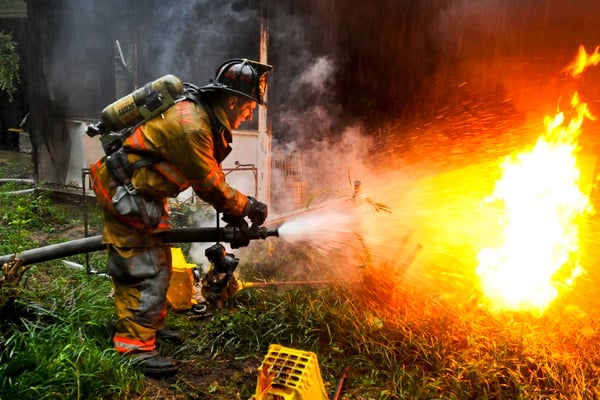
There are numerous environmental factors that can affect the performance of a product, but fire might be the most destructive. To counteract this force, manufacturers developed flame-resistant materials and chemicals to protect our products.
However, it can be difficult to understand what level of flame resistance you need for an HVAC application. Whether you’re accounting for multiple factors or looking to reduce costs, making a decision regarding materials is not always easy.
In this guide, the [HVAC experts](https://muellercustomcut.com/HVAC) at Mueller are going to break down the UL flammability standards you need to be aware of, factors to consider, and questions to ask yourself when making a decision. With this information, you can create sturdy products that can resist any flame.
[](https://cta-redirect.hubspot.com/cta/redirect/6466240/8543cca9-f3de-4876-ac04-ed67f728b2d2)
## What’s the Difference Between Flame Retardant and Retardancy?
Before we get into different flammability ratings, it’s important to highlight the difference between flame retardancy and flame retardant.
Flame retardancy measures what happens to a material when it’s exposed to flame and how long it takes for that flame to go away. A flame retardant is a chemical that is put into materials. It’s easy to confuse the two, so understanding how these terms are different will save you some headaches.
## What Are the Most Common HVAC Flammability Ratings?
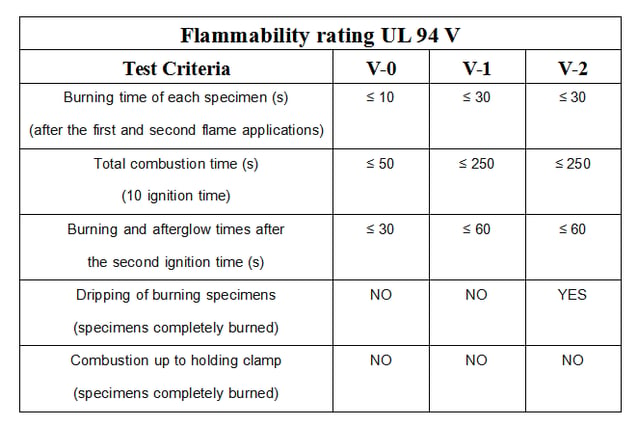
There are multiple ratings for flame resistance (FR) in HVAC applications, but the most common is [UL94](https://legacy-uploads.ul.com/wp-content/uploads/2014/04/ul_UL94CertificationsAndLimitations.pdf) and ASTM E84. The main UL94 ratings are:
- HB
- V-0, V-1, V-2
- HF-1 and HF-2
The E84 rating is most often needed when the insulation or gasketing is placed within the airstream.
UL94HB is rated for slow-burning specimens, while UL94HF-1 and UL94HF-2 rated materials are used to suppress flames.
UL94V-rated materials are most common in HVAC applications. UL94V variants have their own unique properties. UL94V-1 and UL94V-2 are both rated to stop flames from burning within 30 seconds, but UL94V-2 allows for flaming specimens to drip. UL94V-0 materials are specified to stop flames within 10 seconds.
## What Flammability Rating Factors Do You Need to Consider?
In most cases, customers will provide you with the flammability rating they need to meet in a spec sheet. Most companies have common, industry-standard regulations that they need to meet.
There is a degree of flexibility in the HVAC industry when it comes to flammability ratings, which makes it important to know what factors to consider when making a decision.
### Location
It’s important to keep in mind what area of the country or the world you’re selling to, as many places have their own rules and regulations. Some locations, like Chicago and [the United Kingdom](https://www.firesafe.org.uk/furniture-and-furnishings-fire-safety-regulations-19881989-and-1993/), have strict requirements because of past fire incidents.
### Indoor vs. Outdoor Units
Building codes and regulations often determine what flammability ratings are required for indoor HVAC units, which means that outdoor units may have more flexibility in this regard.
### Cost
A material with a high flammability level will have a higher cost to match it. UL94V-0 is the most expensive due to its impressive flame retardancy, while UL94HF-1 and UL94HF-2 cost slightly less. UL94HB is the least expensive of the common material ratings. Another opportunity to reduce cost is avoiding the use of flame-retardant chemicals altogether, as the chemicals can drive costs up. Instead, use materials that are intrinsically flame resistant.
Finding the right flammability rating for your needs should be your first priority, but it’s never a bad idea to look for opportunities to reduce costs.
### Adhesive Properties
It’s also important to be aware of the [adhesive properties](https://www.permabond.com/2016/07/12/fire-resistant-adhesives-4-crucial-properties/) of your product, as flame retardants can affect adhesion levels and cause issues like decreased tack.
You can avoid adhesive issues and even save money by using UL94 V-1 or V-2 instead of V-0 if those levels still meet your product standards.
## How Can You Make the Best Material Selection Based on Flammability Rating?
There are a few main questions you can use to guide your decision-making process and choose the right flammability-rated materials:
- What is the application?
- Do you have the flexibility to change the chosen flammability rating?
- Is it possible to use a lower flammability rating to meet adhesion properties?
- Are you using a common or blanket spec? Does that spec apply to the product?
The most important element to understand when making your decision is the application and what the product will do. Once you understand this aspect, you can find where the flame-resistant material is being used on the device and ask follow-up questions (like those listed above).
There are also more situational variables to consider based on a product’s design that can also reduce costs. For example, if you have a metal, flame-retardant box that has flame-retardant foam on the inside, you can substitute that [insulating material](https://blog.muellercustomcut.com/comparing-most-common-insulating-materials) for a standard foam. Having two layers of flame resistance might be a good idea on paper, but in action, it can be a waste of money because the flames would never reach inside the box.
Knowing your application and thoroughly understanding its design is invaluable for making the right material decision in regard to flammability ratings.
## Conclusion
There are many flame-resistance standards and regulations to be aware of when creating products in the HVAC industry. Units often feature multiple material types, fluids such as oil and refrigerant, as well as types of paint that are flammable.
These numerous flame hazards are all reasons why making the right fire-resistance choice is so important. It is crucial to familiarize yourself with UL flame standards, as well as the outside factors to consider and questions to ask about them. These parts of the decision-making process can mean the difference between a functional product and a hazard.
Use this guide to inform your decision when the time comes to select a flame-resistant [foam](https://muellercustomcut.com/materials/foam), fabric, or other material for your next HVAC application. With the proper precautions and knowledge base, you can create products that can withstand the heat.
## [](https://cta-redirect.hubspot.com/cta/redirect/6466240/6a48c7db-a7a8-433a-95e1-f5c28c48ab4c)
Topics: [HVAC](https://blog.cohesivecomponents.com/tag/hvac), [Flammability](https://blog.cohesivecomponents.com/tag/flammability)
### Industries Served
- [Aerospace](https://muellercustomcut.com/aerospace/)
- [Meters](https://muellercustomcut.com/application/)
- [Electronics](https://muellercustomcut.com/electronics/)
- [Automotive](https://muellercustomcut.com/application/)
- [Health & Safety](https://muellercustomcut.com/application/)
- [Lighting](https://muellercustomcut.com/electronics/)
- [Power Gen](https://muellercustomcut.com/application/)
### Fill out the form below for assistance from our experts!
Video Gallery
[Watch More](https://muellercustomcut.com/videos/)
Case Studies
Supply Chain Reaction - Auto Gaskets
[DOWNLOAD HERE >](https://4p7hxp742jrqk2r2g049wf-wpengine.netdna-ssl.com/wp-content/uploads/2019/06/Auto-Case-Study.pdf)
A Value-Add Proposition - HVAC Gaskets
[DOWNLOAD HERE >](https://4p7hxp742jrqk2r2g049wf-wpengine.netdna-ssl.com/wp-content/uploads/2019/06/HVAC-Case-Study.pdf)
[](https://sur-seal.com)
[](https://sur-seal.com)
[Contact Us](https://blog.cohesivecomponents.com/sur-seal.com/contact/)
[704.837.8139](tel:+7048378139)
- SERVICES
- [Custom Gaskets](https://www.sur-seal.com/products/gaskets/)
- [CNC Cutting](https://www.sur-seal.com/services/cnc-cutting/)
- [Sealing & Containment](https://www.sur-seal.com/services/sealing-containment/)
- [Die Cutting](https://www.sur-seal.com/services/die-cutting/)
- [Product Manufacturing](https://www.sur-seal.com/services/product-manufacturing/)
- About
- [About](https://www.sur-seal.com/about/)
- [Markets](https://www.sur-seal.com/markets/)
- [Blog](https://www.sur-seal.com/blog/)
- [Careers](https://www.sur-seal.com/careers/)
- [Service Area](https://www.sur-seal.com/service-area/)
Service Areas
- [Alabama](https://www.sur-seal.com/service-area/alabama/)
- [Arizona](https://www.sur-seal.com/service-area/arizona/)
- [Arkansas](https://www.sur-seal.com/service-area/arkansas/)
- [California](https://www.sur-seal.com/service-area/california/)
- [Colorado](https://www.sur-seal.com/service-area/colorado/)
- [Connecticut](https://www.sur-seal.com/service-area/connecticut/)
- [Delaware](https://www.sur-seal.com/service-area/delaware/)
- [Florida](https://www.sur-seal.com/service-area/florida/)
- [Georgia](https://www.sur-seal.com/service-area/georgia/)
- [Idaho](https://www.sur-seal.com/service-area/idaho/)
- [Illinois](https://www.sur-seal.com/service-area/illinois/)
- [Indiana](https://www.sur-seal.com/service-area/indiana/)
- [Iowa](https://www.sur-seal.com/service-area/iowa/)
- [Kansas](https://www.sur-seal.com/service-area/kansas/)
- [Kentucky](https://www.sur-seal.com/service-area/kentucky/)
- [Louisiana](https://www.sur-seal.com/service-area/louisiana/)
- [Maine](https://www.sur-seal.com/service-area/maine/)
- [Maryland](https://www.sur-seal.com/service-area/maryland/)
- [Massachusetts](https://www.sur-seal.com/service-area/massachusetts)
- [Michigan](https://www.sur-seal.com/service-area/michigan/)
- [Minnesota](https://www.sur-seal.com/service-area/minnesota/)
- [Mississippi](https://www.sur-seal.com/service-area/mississippi/)
- [Missouri](https://www.sur-seal.com/service-area/missouri/)
- [Montana](https://www.sur-seal.com/service-area/montana/)
- [Nebraska](https://www.sur-seal.com/service-area/nebraska/)
- [Nevada](https://www.sur-seal.com/service-area/nevada/)
- [New Hampshire](https://www.sur-seal.com/service-area/new-hampshire/)
- [New Jersey](https://www.sur-seal.com/service-area/new-jersey/)
- [New Mexico](https://www.sur-seal.com/service-area/new-mexico/)
- [New York](https://www.sur-seal.com/service-area/new-york/)
- [North Carolina](https://www.sur-seal.com/service-area/north-carolina/)
- [North Dakota](https://www.sur-seal.com/service-area/north-dakota/)
- [Ohio](https://www.sur-seal.com/service-area/ohio/)
- [Oklahoma](https://www.sur-seal.com/service-area/oklahoma/)
- [Oregon](https://www.sur-seal.com/service-area/oregon/)
- [Pennsylvania](https://www.sur-seal.com/service-area/pennsylvania/)
- [Rhode Island](https://www.sur-seal.com/service-area/rhode-island/)
- [South Carolina](https://www.sur-seal.com/service-area/south-carolina/)
- [South Dakota](https://www.sur-seal.com/service-area/south-dakota/)
- [Tennessee](https://www.sur-seal.com/service-area/tennessee/)
- [Texas](https://www.sur-seal.com/service-area/texas/)
- [Utah](https://www.sur-seal.com/service-area/utah/)
- [Vermont](https://www.sur-seal.com/service-area/vermont/)
- [Virginia](https://www.sur-seal.com/service-area/virginia/)
- [Washington](https://www.sur-seal.com/service-area/washington/)
- [Washington, DC](https://www.sur-seal.com/service-area/washington-dc/)
- [West Virginia](https://www.sur-seal.com/service-area/west-virginia/)
- [Wisconsin](https://www.sur-seal.com/service-area/wisconsin/)
- [Wyoming](https://www.sur-seal.com/service-area/wyoming/)
© 2026 SUR-SEAL | Web Design by [ Blue Corona](https://www.bluecorona.com/) | [Privacy Policy](https://www.sur-seal.com/privacy-policy/) | Disclaimer
[ Contact Us](https://www.sur-seal.com/?hsCacheBuster=4487#)
```json
{
"@context" : "http://schema.org",
"@type" : "Article",
"articleBody" : "There are numerous environmental factors that can affect the performance of a product, but fire might be the most destructive. To counteract this force, manufacturers developed flame-resistant materials and chemicals to protect our products.\n\nHowever, it can be difficult to understand what level of flame resistance you need for an HVAC application. Whether you’re accounting for multiple factors or looking to reduce costs, making a decision regarding materials is not always easy.
\nIn this guide, the HVAC experts at Mueller are going to break down the UL flammability standards you need to be aware of, factors to consider, and questions to ask yourself when making a decision. With this information, you can create sturdy products that can resist any flame.
\nSchedule a Time to Speak With an Expert
\nWhat’s the Difference Between Flame Retardant and Retardancy?
\nBefore we get into different flammability ratings, it’s important to highlight the difference between flame retardancy and flame retardant.
\nFlame retardancy measures what happens to a material when it’s exposed to flame and how long it takes for that flame to go away. A flame retardant is a chemical that is put into materials. It’s easy to confuse the two, so understanding how these terms are different will save you some headaches.
\n
\nWhat Are the Most Common HVAC Flammability Ratings?
\nThere are multiple ratings for flame resistance (FR) in HVAC applications, but the most common is UL94 and ASTM E84. The main UL94 ratings are:
\n\n- HB
\n- V-0, V-1, V-2
\n- HF-1 and HF-2
\n
\nThe E84 rating is most often needed when the insulation or gasketing is placed within the airstream.
\nUL94HB is rated for slow-burning specimens, while UL94HF-1 and UL94HF-2 rated materials are used to suppress flames.
\nUL94V-rated materials are most common in HVAC applications. UL94V variants have their own unique properties. UL94V-1 and UL94V-2 are both rated to stop flames from burning within 30 seconds, but UL94V-2 allows for flaming specimens to drip. UL94V-0 materials are specified to stop flames within 10 seconds.
\nWhat Flammability Rating Factors Do You Need to Consider?
\nIn most cases, customers will provide you with the flammability rating they need to meet in a spec sheet. Most companies have common, industry-standard regulations that they need to meet.
\nThere is a degree of flexibility in the HVAC industry when it comes to flammability ratings, which makes it important to know what factors to consider when making a decision.
\nLocation
\nIt’s important to keep in mind what area of the country or the world you’re selling to, as many places have their own rules and regulations. Some locations, like Chicago and the United Kingdom, have strict requirements because of past fire incidents.
\nIndoor vs. Outdoor Units
\nBuilding codes and regulations often determine what flammability ratings are required for indoor HVAC units, which means that outdoor units may have more flexibility in this regard.
\nCost
\nA material with a high flammability level will have a higher cost to match it. UL94V-0 is the most expensive due to its impressive flame retardancy, while UL94HF-1 and UL94HF-2 cost slightly less. UL94HB is the least expensive of the common material ratings. Another opportunity to reduce cost is avoiding the use of flame-retardant chemicals altogether, as the chemicals can drive costs up. Instead, use materials that are intrinsically flame resistant.
\nFinding the right flammability rating for your needs should be your first priority, but it’s never a bad idea to look for opportunities to reduce costs.
\nAdhesive Properties
\nIt’s also important to be aware of the adhesive properties of your product, as flame retardants can affect adhesion levels and cause issues like decreased tack.
\nYou can avoid adhesive issues and even save money by using UL94 V-1 or V-2 instead of V-0 if those levels still meet your product standards.
\n
\nHow Can You Make the Best Material Selection Based on Flammability Rating?
\nThere are a few main questions you can use to guide your decision-making process and choose the right flammability-rated materials:
\n\n- What is the application?
\n- Do you have the flexibility to change the chosen flammability rating?
\n- Is it possible to use a lower flammability rating to meet adhesion properties?
\n- Are you using a common or blanket spec? Does that spec apply to the product?
\n
\nThe most important element to understand when making your decision is the application and what the product will do. Once you understand this aspect, you can find where the flame-resistant material is being used on the device and ask follow-up questions (like those listed above).
\nThere are also more situational variables to consider based on a product’s design that can also reduce costs. For example, if you have a metal, flame-retardant box that has flame-retardant foam on the inside, you can substitute that insulating material for a standard foam. Having two layers of flame resistance might be a good idea on paper, but in action, it can be a waste of money because the flames would never reach inside the box.
\nKnowing your application and thoroughly understanding its design is invaluable for making the right material decision in regard to flammability ratings.
\nConclusion
\nThere are many flame-resistance standards and regulations to be aware of when creating products in the HVAC industry. Units often feature multiple material types, fluids such as oil and refrigerant, as well as types of paint that are flammable.
\nThese numerous flame hazards are all reasons why making the right fire-resistance choice is so important. It is crucial to familiarize yourself with UL flame standards, as well as the outside factors to consider and questions to ask about them. These parts of the decision-making process can mean the difference between a functional product and a hazard.
\nUse this guide to inform your decision when the time comes to select a flame-resistant foam, fabric, or other material for your next HVAC application. With the proper precautions and knowledge base, you can create products that can withstand the heat.",
"articleSection" : "HVAC, Flammability",
"author" : {
"@type" : "Person",
"name" : "Mueller Custom Cut Solutions Team"
},
"datePublished" : "2020-01-16T14:13:00",
"image" : "https://blog.muellercustomcut.com/hs-fs/hubfs/firefighting.jpg?width=600&name=firefighting.jpg",
"name" : "How to Choose HVAC Product Materials Based on UL Flammability Rating",
"publisher" : {
"@type" : "Organization",
"name" : "Mueller Custom Cut"
},
"url" : "https://blog.muellercustomcut.com/hvac-flammability-ratings"
}
```